
Buying a used phone? Check ownership locks before the price
A cheap device is not usable value if the previous owner, a lost-device record or an unpaid condition can block activation.
Evergreen U.S.-oriented shopping guide; Apple, CTIA and FTC guidance rechecked September 20, 2026.
In this article
Ownership comes before condition
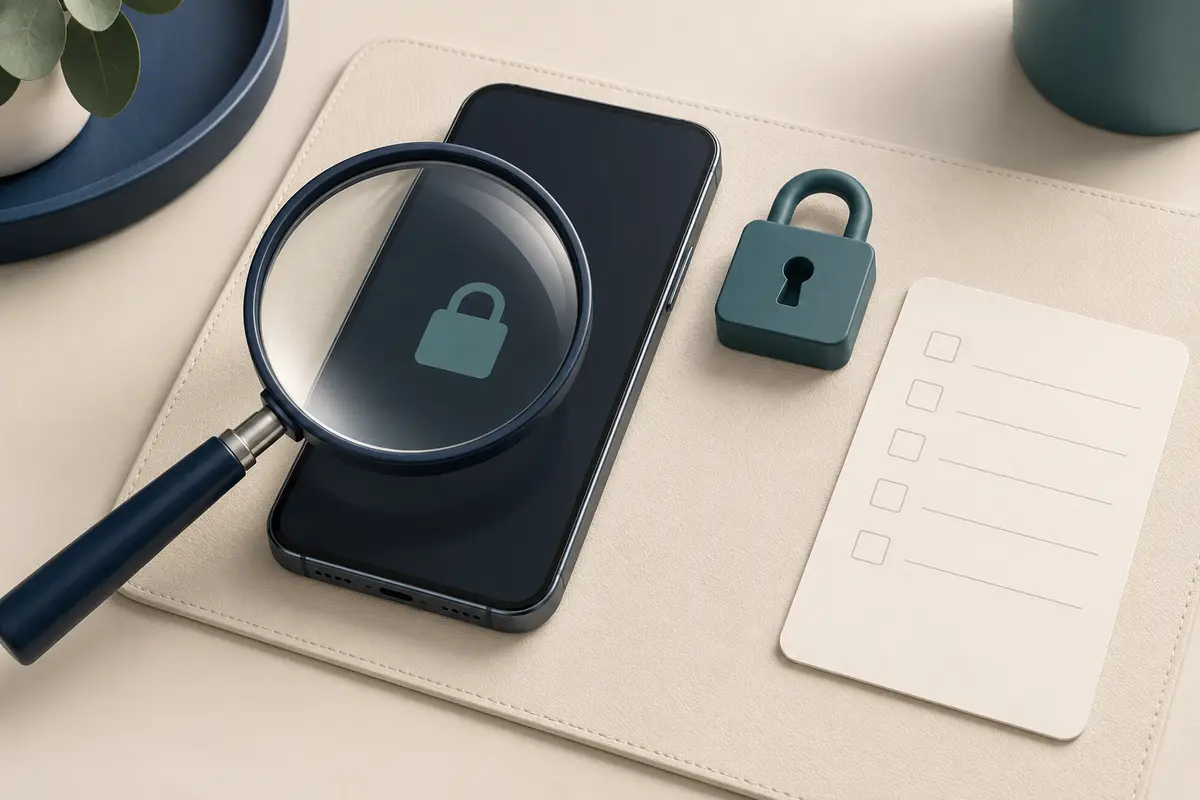
A phone can look perfect and still be unusable because an account lock prevents activation. Apple’s current guidance says not to take ownership of a used iPhone or iPad while Activation Lock is enabled. The device should be erased, removed from the previous owner’s account and able to reach the setup “Hello” screen without asking for that owner’s credentials. Apple Activation Lock guidance.
That test is Apple-specific. Android manufacturers, carriers and device-management systems use different controls. Ask the seller to complete the official transfer or removal process for the exact model; a promise to fix it later is not the same as a phone you can activate now.
Check the device identifier without publishing it
In the United States, CTIA’s Stolen Phone Checker lets consumers check whether a device has been reported lost or stolen using GSMA Device Check data. Use the identifier shown by the device and match it to the packaging or receipt when available. CTIA Stolen Phone Checker.
A clear result is one input, not a guarantee about ownership, financing, future carrier status or hidden damage. Do not post a device identifier publicly in a marketplace comment or screenshot. Perform the check through the official tool and keep only the purchase records you need.
Use a stop-before-payment checklist
| Check | Acceptable evidence | Reason to pause |
|---|---|---|
| Ownership lock | Official setup flow proceeds for the buyer | Previous owner’s account or organization is still required |
| Lost/stolen status | Official identifier check completed for the same device | Reported, mismatched or unreadable identifier |
| Carrier use | Your carrier confirms model, bands and unlock status | Seller relies only on “should work” |
| Hardware | Screen, cameras, microphones, charging, buttons and biometrics checked | Important function cannot be tested |
| Support | Current security-update policy checked for exact model | Support status is unknown or too short for your plan |
| Remedy | Written return, warranty or marketplace protection terms | Irreversible payment before inspection |
Turn the listing price into a usable-cost comparison
Use usable cost = purchase price + immediate repairs + missing essentials + unavoidable setup or carrier costs. Keep a separate risk reserve for uncertain defects instead of pretending they are guaranteed expenses.
A private-sale phone costs $420. You expect a $90 battery service and need a $30 charger, so its immediate usable cost is $540. A refurbished alternative costs $560 delivered and includes a written return period. The apparent $140 price gap has become $20 before assigning any value to the different remedies.
Do not invent resale value or battery life to force a decision. If a repair is only possible rather than expected, show both outcomes: $450 without the battery service and $540 with it in this example.
Read who stands behind the sale
The FTC explains that warranty rights depend on the written promise, the seller and state law. Used merchandise bought from a merchant can have different implied-warranty treatment from a private sale, and “as is” rules vary by state. Read the actual terms before payment rather than assuming that “refurbished,” “certified” or a marketplace badge creates a specific warranty. FTC warranty guidance.
Record the seller identity, listing, identifier, condition description, payment method and promised return window. Use the marketplace’s protected checkout when it offers one; moving a transaction outside the platform can remove protections.
Walk away when a critical check stays unresolved
Do not let a meeting deadline or a low price replace an activation test. Pause when the seller cannot remove an ownership lock, the identifier does not match, the device is reported lost or stolen, essential functions cannot be checked, or the payment method gives you no realistic remedy.
This checklist does not authenticate a seller, guarantee a clean financial history, diagnose hidden damage or interpret local law. Carrier databases and platform terms can change after a check. For a high-value purchase, use a seller and inspection process that gives you a documented path if the device is not as described.
Sources & dates
Sources checked September 20, 2026. Prepared with AI assistance. Read our editorial standards.

Comments
Loading comments…